

From office buildings to factory floors, service industries to civil administrations, work in the modern workplace can be a disheartening thing. What you'll find, in most, is a system optimized for efficiency and revenue. Often, running at the cost of the human beings laboring to sustain it.
A grind.
Many of today's employees don't just work a job; they sacrifice time, energy, even their mental health to sustain someone else's vision. At the expense of their own. So the owner can send their kid to a "really good college."
But what if work didn't have to feel like a sacrifice? What if businesses could be vehicles for enhancing society, supporting the people in them while creating a ripple of positive change in the world? And if you've read this far, you might be exactly that kind of leader.
The problem isn't work, it's how we work
To start, we should remember: work itself isn't the enemy. Assuming you don't labor in something criminal or innately meaningless, almost any work can be beneficial, worthwhile, even fulfilling.
The real enemy lurking here is the structure of work, the "job." The traditional 9-to-5 isn't just a schedule; it's a mindset. It tells us that value is measured in hours logged rather than results created. It convinces us that our self-worth is tied to our showing up, not our impact.
Too many people feel stuck, their time controlled by systems that value their ability to produce over a greater purpose. And the consequences? Overworked employees. Burnout. Unnecessary stress. Lackluster work. Anxiety. Depression. A culture where mental health services are so regularly needed that "there's an app for that," not because people are fundamentally broken, but because work has broken them.
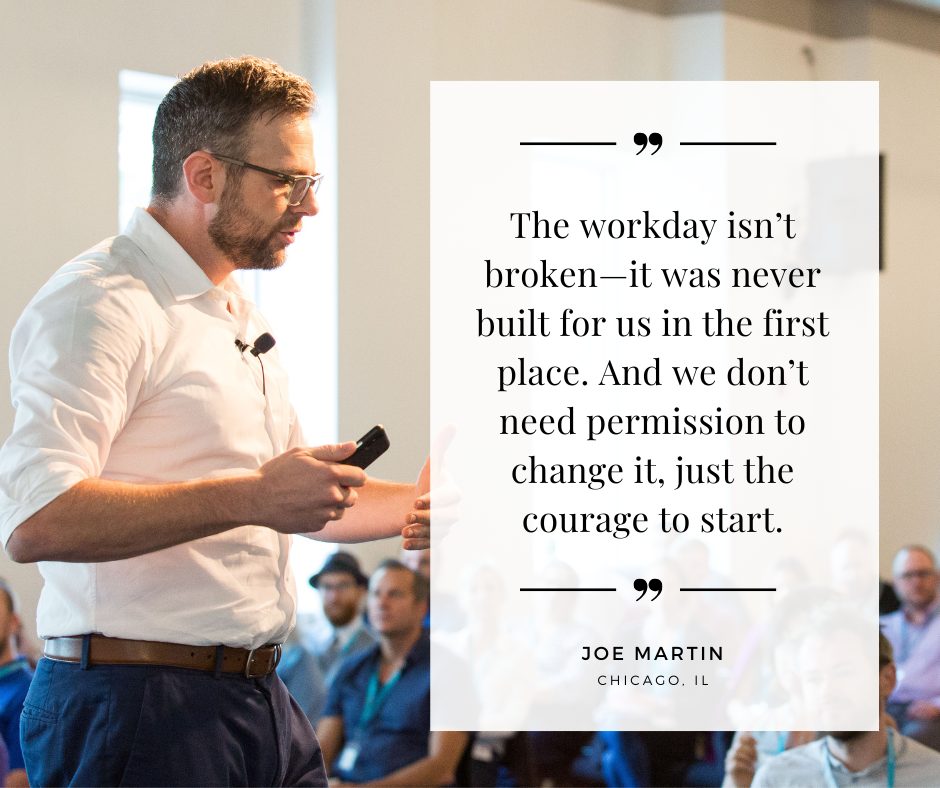
But it doesn't have to be this way. Work can be redesigned. It can create freedom instead of consuming it. And it starts with businesses willing to step up and be that change.
Businesses as agents of change
Our workforces don't need more governance or policies to feel these shifts. They need businesses that give a damn about the person, the parent, the sibling, the human. When leaders treat their employees like real people, not resources, they unlock something powerful: trust. And trust creates loyalty, innovation, and resilience.
Here's the good news: this kind of change doesn't require a massive overhaul. It starts with small, intentional choices. Paying people what they're worth. Offering flexible schedules that fit their lives. Encouraging time off, not as a perk but as a necessity. Investing in learning, growth, and personal development.
Even one simple meeting per week to hear how your people are really doing can have a tremendous impact on the mental wellbeing of your entire organization.
Follow the leader
But where do you start? There are a lot of steps you can take to prioritize your people's wellbeing, but the first one is non-negotiable.
You must be a leader who models what a healthy work/life balance looks like.
Without this step, your employees will forever feel torn between the culture you're trying to create and the business they see you running. Your staff looks to you to see what success at the company takes.
When you respond to emails on holiday, come in on everyone else's day off, skip your own vacation, and send messages after hours, you're sending a message: that despite the good habits you're encouraging, you expect something different.
Leaders have told me, "That's what it takes to run a company." But what they mean is, "That's what it takes to run this company." Which begs the question: can it be run a different way? And if it can't, is it really the company you want to be running?
Your job should help you live
Your job shouldn't cost you your life. It should help you live it.
That isn't soft. It's how you build a business people never want to leave, and a life you actually get to be present for. Start with one small change this week, for your team and for yourself.